Presented by Seng-hian Lau (National Taiwan Normal University) in the International Symposium on Research and Teaching of Endangered and Marginalized Languages in East and Southeast Asia. May 3 - 4, 2024, at UCLA.
As
seen in the 1915 survey, Taiwanese speakers comprised the majority of the
population, and the language was spoken among different ethnic groups.[1]

Even after this island was handed over to the KMT government following World War II, despite decades of severe language suppression under the Mandarin Only Policy, The 2003 survey further demonstrates that Taiwanese remained the lingua franca.[2]

Interestingly, few people are aware that the first newspaper published on the island was in Taiwanese.[3]

Naming a language after the place where it is spoken as the lingua franca is a common practice worldwide. For example, according to the Chinese government's claim in 2005, there are 56 ethnic groups in China.[4] In addition to the languages of these minority groups, the largest ethnic group, the Han people, also speak various Sinitic languages, including Hakka, Shanghainese, and Cantonese, among others. However, nobody disputes what the term "Chinese" refers to. When someone says, "I'm learning Chinese," you wouldn't ask them which specific Chinese language they are learning. Are they learning the Zhuang language spoken by the Zhuang people in Guangxi Zhuang Autonomous Region in Southern China or Hakka spoken by people in Southeastern China? Interestingly, there are individuals in Taiwan who intentionally argue about the designation of the language name "Taiwanese."
Anyway,
it's hypocritical to refer to Taiwanese as Southern Min but feel comfortable
calling the language I'm currently speaking as English instead of labeling it
as Anglo-Saxon, isn't it?
Apart
from survey results, the name 'Taiwanese' can also be found in historical
literature and documents. For instance, in the year when Taiwan was handed over
to the Japanese Empire by the Qing Empire, several Japanese individuals had
already published books introducing the lingua franca of this island. These
books include "Taiwango syu" (台灣語集) by Yuzuno Yasukazu (俁野保和), "Taiwan Dogo" (台灣土語) by Sano Naoki (佐野直記), and "Taiwango" (台灣語) by Tanai Yaokuman (田內八百久万). All of these books refer to the language as Taiwanese. In
1931, the Government-General of Taiwan published a dictionary called
"Tai-ni Taijiden" (臺日大辭典). The title of the dictionary
literally means Taiwanese-Japanese Comprehensive Dictionary, and its lexical
items only include those of the island's lingua franca, which is the focus of
this discussion. After World War II, the KMT government assumed control over
Taiwan. Despite their efforts to eradicate all local languages and replace them
with Mandarin Chinese, they were well aware of the language referred to as
"Taiwanese." The KMT government also published books titled with the
Mandarin term "Taiyu," which means Taiwanese.

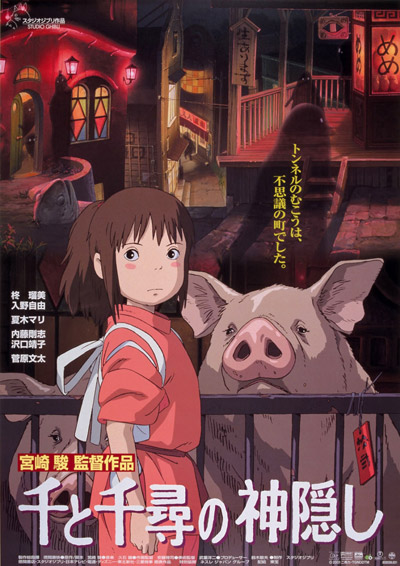
The KMT government was well aware that appropriating the name of this language was crucial to their intent of suppressing it, as depicted in the movie "Spirited Away." In their efforts to destroy Taiwanese identity and assimilate Taiwan, the KMT government renamed the language as "Southern Min" or "Min Nan language" This renaming was exemplified in a newspaper article published on October 27, 1967 on the Economic Daily News. The article, titled "Announcement to Correct the Common Usage of 'Taiwanese' to 'Min Nan Language,' " stated the following:
The
relevant authorities hereby announce that the commonly used terms 'Taiwanese'
and 'Taiwanese language' should be corrected to 'Southern Min' and 'Min Nan
language.' The authorities point out that the majority of Taiwan's residents
come from the Fujian and Guangdong regions of China, and the languages they
speak are Southern Min and Hakka. However, it is unclear when or why the
general public and various media outlets began using the terms 'Taiwanese' and
'Taiwanese language' instead of 'Southern Min' or 'Hakka.' This is not only
inaccurate but also has the potential for negative consequences. Referring to
Southern Min as 'Taiwanese' erases the existence of Hakka, as many people in
Taiwan also speak Hakka. Therefore, a correction must be made. The Government
Information Office, Provincial News Office, and Municipal News Office have been
instructed to promote this correction due to its prevalence in movies, radio,
television, newspapers, and other media.

And this tactic is still employed by those who continue to oppose the use of the name 'Taiwanese' today. However, it is worth noting that this argument is only raised within Taiwan. Even Hakka is spoken in China, Indonesia, and Malaysia, yet I have never encountered anyone arguing that the language names, such as Chinese, Indonesian, and Malay, are problematic due to their lack of complete inclusivity.
Consequently, there are concerns regarding cultural hegemony, including the name dispute, particularly from certain ethnic groups, some within the Hakka community.

The
effects of the KMT government's language policies can be seen in the mistaken
idea and the underlying ideology behind it persist to this day.
Before
the KMT government took control of Taiwan after World War II, Mandarin Chinese
was not spoken on the island. During that time, people conversed in their
respective ethnic languages and used Taiwanese as the lingua franca, alongside
Japanese, which was promoted by the Japanese colonial government.
However,
the lingua franca status of Taiwanese witnessed a significant decline due to
the language policies implemented during the KMT's authoritarian rule under
martial law after World War II. The KMT government actively promoted the use of
Mandarin Chinese, to replace Taiwanese as the dominant language. Taiwanese was
strictly prohibited in schools, media outlets, and public occasions. Students
faced humiliation and fines for speaking Taiwanese at school. Publications in
Taiwanese and other local languages were banned and strictly regulated. The KMT
government's propaganda depicted the Taiwanese language as inferior, associated
with the uneducated and the criminals.[5] This
ideology was deeply ingrained in people's minds through education and media
channels.
Nowadays, most people in Taiwan are unaware that the first newspaper in Taiwan, Tâi-oân Kàu-hōe Kong-pò (‘Taiwan Church News’), was initially published in 1885 in Taiwanese. The newspaper continued to publish in Taiwanese during the Japanese colonial rule but was banned from printing in Taiwanese by the KMT government in 1969. (Klöter 2005:217)[6] After decades of Mandarin-only policy, the ideology instilled by the KMT government has been internalized by the people in Taiwan.

Many
individuals unconsciously avoid speaking Taiwanese in public settings. Even
among those who converse in Taiwanese with their peers, they switch to Mandarin
Chinese when talking to strangers and young people, including their own
children and grandchildren. This is evident in the results of a survey that
examined the language used by parents when communicating with their 3-year-old
children, revealing Mandarin Chinese as the dominant family language.[7]
About ten years ago, only 22% of individuals in their twenties still spoke
Taiwanese at home.[8] The
number of children who can speak the language is alarmingly low, and young kids
who do not understand Taiwanese can be found throughout Taiwan.
Here are some posts I gathered on Facebook. Let me briefly summarize them for you. On the upper left, a frustrated Taiwanese teacher complains about how low her students' motivation is, even though she's tried many things to motivate them. On the lower left, an advocate shared a story about a woman who approached her after a talk. The woman confided that all her neighbors have stopped using Taiwanese with their children, even though she lives in the countryside of Southern Taiwan. On the right-hand side, a father from Tainan, a city in Southern Taiwan where Taiwanese speakers are supposedly abundant, describes his encounter at a park. He mentions his sons were playing with another girl when her grandmother, speaking Mandarin with a strong accent, reminded the girl to be careful. After hearing the father and sons conversing in Taiwanese, the girl said before leaving, "Actually, my father also speaks the language you speak."

And here’s an excerpt from a young author who translated Tagore’s Stray Birds into Taiwanese.[9] You can find the English translation on the right-hand side. What she said depicts the language massacre that occurred between three generations.

The severity of the language suppression carried out by the KMT government becomes even more evident when compared to the Japanese colonial rule.
The
language policy during the Japanese colonial period in Taiwan can be divided
into three phases: the experimental period, the assimilation period, and the
period of imperialization.[10]
During
the experimental period from 1895 to 1918, there was a gradual exploration of
Japanese language instruction. In the assimilation period from 1919 to 1936,
the focus shifted towards teaching Japanese in general education, reducing the
use of Classical Chinese. Finally, in the period of imperialization from 1937
to 1945, the usage of Japanese language expanded further due to the war between
China and Japan. The objectives of these policies were to popularize and
promote the Japanese language through various means
Compared
to the KMT government's language assimilation policy implemented after World
War II, Japan's language policies during the early stages of ruling Taiwan were
relatively lenient. Schools were allowed to teach Classical Chinese using
Taiwanese and Hakka languages. Furthermore, unlike the KMT government, which
conducted minimal research and use of the Taiwanese languages during the period
of martial law, the Japanese colonial government invested resources and
manpower in training police officers and officials to learn the Taiwanese
language. They also conducted research and published textbooks and
dictionaries. These materials and dictionaries remain important references in
Taiwanese language studies to this day.[11]
In
recent years, Taiwan has witnessed a shift in identity from Chinese to
Taiwanese identity.
We
can see this from the long-term survey by NCCU. Presently, the majority of
people in Taiwan identify themselves as Taiwanese rather than Chinese. In
certain regions around the world, such identity shifts have been accompanied by
a transition in language, from a non-native to their native language. However,
Taiwan is more comparable to the South American nations that continue to use
the language of the colonizers. (Anderson 2006:195-199)[12] The
majority of Taiwanese young people readily embrace Mandarin Chinese without any
unease, as it is the language in which they have been brought up and educated.

Why do Taiwanese people show such little concern for their own language, even after the democratization of the island? One of the reasons lies in the misconceptions surrounding the status of the Taiwanese language. These misconceptions have perpetuated the KMT's historical practices of "demeaning" and "de-subjectifying" Taiwanese. This is evident in the ongoing debate regarding the name of the language I mentioned previously.
So,
what are the misconceptions? The first one is the misconception that Taiwanese
is merely a Chinese dialect. Furthermore, people wrongly believe that Taiwanese
does not warrant independent treatment because it is considered a variant of Southern
Min, which is also spoken in other regions such as China and Southeast Asia.
An
objective criterion for distinguishing between languages and dialects is mutual
intelligibility. Taiwanese and Mandarin Chinese are not mutually intelligible.
Here are some comparisons of their phonology, vocabulary, and syntax.
In Mandarin Chinese, there are 21 consonants and 6 vowels, with a retroflex base. Mandarin consists of five tones, including the neutral tone. Notable aspects of Mandarin include tone sandhi, specifically the third tone tone sandhi, and the usage of "bu" and "yi".[13]

Taiwanese,
on the other hand, comprises 15 consonants and 6 vowels. Unlike Mandarin,
Taiwanese includes syllables ending with unreleased stops and the nasal
bilabial sound. Taiwanese consists of nine tones, including high rising tones
commonly found in loanwords, as well as a neutral tone. In contrast to Chinese,
Taiwanese exhibits extensive tone sandhi, with each tone having a corresponding
sandhi tone.[14]
When
it comes to vocabulary, Ong 2002 studied the cognates between Mandarin and
Amoy, which is another variety of Southern Min mutually intelligible with
Taiwanese. He noted that the percentage of cognates between English and German,
both Germanic languages, is higher than the percentage of cognates between Amoy
and Mandarin.[15]
Many individuals in Taiwan mistakenly believe that Taiwanese only differs from
Mandarin in terms of pronunciation, which is totally wrong.
In
terms of syntax, Taiwanese has its own distinctive characteristics. For
instance, Taiwanese utilizes negators differently from Mandarin. Only in
Taiwanese is obligatory object fronting required with certain verbal compounds.
Additionally, there are unique sentence patterns in Taiwanese, such as
evaluative verbal reduplication and the event control construction.
Overall,
it is not surprising that these two languages are not mutually intelligible.
I
am aware that the term "dialect" is sometimes used politically with a
negative connotation, referring to non-national languages that hold a socially
and politically subordinate status to the country's official language. However,
Taiwanese has now been recognized as one of the national languages in Taiwan,
as stated in the Development of National Languages Act in 2018. The Ministry of
Education has also standardized its orthography. While the government and the
people in Taiwan may still have a predominantly Mandarin-centric perspective,
legally and politically, Taiwanese should no longer be considered a dialect.
There
is another common misconception that Taiwanese is merely a colloquial language.
In reality, Taiwanese has been written and used in publications for over a
hundred years. It was the language used in the first newspaper in Taiwan, and
there have been thousands of publications, including a medical textbook,
monographs, and creative writings like novels.[16] The
reason this misconception persists is because Taiwanese writing was never
taught in schools until recently.
With all the facts, the Ministry of Education and certain individuals in Taiwan still insist on referring to this language as Southern Min or Min Nan. Interestingly, this is the exact name given by the KMT government during the martial law period to replace its original name, Taiwanese.

Do you remember the movie Spirited Away? This misnomer itself poses a hindrance to the revitalization of Taiwanese. The term 'Southern Min' encompasses a group of language varieties, including Amoy, Quanzhou, Zhangzhou, Chaozhou in China, Lán-lâng-uē, Penang Hokkien, and others spoken in Southeastern Asia, along with Taiwanese spoken in Taiwan. Some of these varieties are not even mutually intelligible.
If
Amoy and other Southern Min varieties can have their own distinct names, such
as Lán-lâng-uē being used to refer to the variety spoken in the Philippines,
why can't Taiwanese be called Taiwanese? Isn't this a double standard?
In
fact, according to a survey conducted in 2020, Tâi-gí or Tâi-uân-uē,
literally meaning Taiwanese language, is the name by which most people in
Taiwan refer to this language.[17]
Continuing to use the term employed by the previous regime would undermine the
people's identity and disregard the historical fact that this language serves
as the natural lingua franca of the island. It would overlook the uniqueness of
this language and its inseparable connection to Taiwanese culture, traditional
arts, place names, and linguistic representation. Without Taiwanese, the
essence of Taiwanese culture, history, traditional arts, and many place names
would be lost.
Ask foreigners who have a profound understanding of Taiwan, and they will acknowledge that it is Taiwanese, not Mandarin Chinese, that historically and culturally represents Taiwan.[18] Ask a westerner whether he or she can distinguish Korean culture from Chinese culture only through festivals, architecture, and clothings. It’s always the language that plays a vital role. The misnomer "Southern Min" is to diminish the distinctiveness and identity of Taiwanese culture and history.

However,
most Taiwanese people, educated without this language and those historical
facts, can’t even recognize Taiwanese Romanization. Here is a Facebook post
from a Japanese actor named Tanaka Chie. She wrote in Taiwanese and it says
‘now I can understand more when listening to Taiwanese. But it’s not easy to
speak in this language. I’ll keep on working on it. Good morning. Have a nice
day.’ See what these Taiwanese people commented below on the right-hand side?
They said: it’s Vietnamese. Or it’s Thai. And Miss Tanaka, a Japanese who is
learning Taiwanese, replied below: It’s Taiwanese. This highlights the
challenge of Taiwanese language recognition.

The progress made so far in revitalizing Taiwanese includes granting it a legal status as one of the national languages, its inclusion in school curricula, and a significant increase in publications and creative works following its standardization.
Since
the lifting of martial law in the 1980s, activists have persistently advocated
against Chinese dominance through continuous efforts in teaching, publishing,
and advocating for the legal recognition of Taiwanese and other Taiwanese
languages. After decades of campaigning, the Taiwan government enacted the
Development of National Languages Act in 2018.
However,
the deep-seated contempt towards this language still remains, and Chinese
continues to enjoy a privileged and monopolized high language status on the
island. While the law calls for the conservation of endangered Taiwanese local
languages, it lacks any penalties or deadlines. In conclusion, the Development
of National Languages Act is a significant milestone but has not brought about
any fundamental changes.
Since
2003, 40 minutes per week have been allocated in the curriculum of elementary
schools for teaching Taiwan languages. The course on Taiwan languages was also
introduced into the curriculum of junior and senior high schools in 2023.
However, the hours are so limited: 40 minutes per week in elementary schools,
50 minutes per week in the first two years in junior high schools, and 50
minutes per week in one of the three years in senior high schools. Also, we
have parents and teachers who do not care about these courses, as these courses
are not directly related to college or university applications. Furthermore,
the lack of language usage environment at home or school, combined with the
limited hours of instruction that treats Taiwanese just like a foreign
language, also results in minimal impact. While most public transportation
systems now broadcast in Taiwanese due to legal requirements, facing inquiries
in Taiwanese, clerks often serve and respond in Mandarin.
In
2006, the Ministry of Education in Taiwan announced the official romanization
system for Taiwanese. Since the Ministry’s first approved edition of the online
Dictionary was released in 2011, Taiwanese writing, whether in roman script or
using Chinese characters, has been standardized.
Moreover,
the government organizes writing competitions in Taiwanese periodically and
provides subsidies for the publication of creative works, including videos and
music. There has been an increase in the number of books, dramas, and movies
produced in Taiwanese. Additionally, a language proficiency test is regularly
conducted, with thousands of people taking the exam each time. However, the
Mandarin-dominant environment persists. Mandarin continues to be the sole
medium of instruction, the default language for government operations and
ceremonies. The deeply ingrained mindset of defaulting to Mandarin is
prevalent. Even coworkers and friends who can speak Taiwanese often
unconsciously converse in Mandarin. Grandparents, parents, or close friends who
do speak Taiwanese themselves tend to switch to Mandarin when speaking to their
grandchildren, sons, and daughters. Only a few people pass on Taiwanese to the
next generation. If this situation remains unchanged, Taiwanese will cease to
be spoken within approximately 30 years, disappearing with the generations of
people who still speak it.
Currently,
people in Taiwan are allowed to choose a spelling for their name on their
passport other than Mandarin. However, do they choose to spell and pronounce
their name in Taiwanese or their ethnic language? Do they opt to spell and
pronounce their children's names in Taiwanese? Only a few people do so. This
reflects the prevalence of the Mandarin-only and default mindset in Taiwan
society after decades of language suppression under KMT rule.
While
government policies and public awareness are crucial, individual and
community-driven initiatives are also essential for language revitalization. As
an author and language advocate, I have been involved in several projects to
promote Taiwanese. Briefly speaking, I’m an author of several books, I
co-edited a Taiwanese textbook for senior high schools, and I’m leading a team
developing a gamified Taiwanese learning website.
Prior
to my research and lectures on Taiwanese at universities, I worked at the
Li-kang Khioh Taiwanese Foundation from 2007 to 2017. During this time, I
served as the editor of a Taiwanese periodical and actively participated in
activities promoting and revitalizing the language. Not only am I a language
advocate, but I also engage in creative writing in Taiwanese. I have published
two collections of novellas in Taiwanese.
I
have been involved in the administration of the Taiwanese language proficiency
test and have also been working on a project to create an online grammar database.
Since the beginning of 2023, I have delivered 20 talks about Taiwanese both
online and at various locations throughout Taiwan.
Here are the covers of the periodical that prints the poems, prose, short stories, and novels in Taiwanese contributed by various writers. I had been editing it for 10 years. The periodical is the longest running one among its peers and it’s still in publication.[19]

And these are my two collections of novellas and short stories written in Taiwanese.[20]

I am not only participating in the administration of the Taiwanese language proficiency test but also served as the co-editor of a Taiwanese textbook for senior high schools. We tried to make a textbook with not only modern content but also an intriguing cover that appeals to teenagers.[21]

Due to my concerns regarding misconceptions that hinder the revitalization of Taiwanese, I have published three books. One of these books is a topic-based Taiwanese grammar book written in Chinese.[22] It is specifically designed for individuals who do not read Taiwanese and have limited knowledge of the language. In this book, I dispel the misunderstanding that Taiwanese is a dialect and highlight the distinctive features of Taiwanese grammar from a cross-linguistic perspective, particularly those that differentiate it from Mandarin.
Afterward,
I wrote a learning and teaching book titled 'Superb Taiwanese Primer' in
English.[23]
This book is utilized in the course 'Basic Taiwanese for International
Students.' Additionally, I hope that this book can present a modern and
international image for the language, helping to dispel the derogatory and
devaluing perception that some individuals in Taiwan hold.


Recently, I published another book, a popular science fiction work.[24] As a syntactician working within formal theoretical frameworks, I have encountered numerous intriguing features of Taiwanese that can contribute to typology and linguistic theories. However, both the syntactic theories and the unique features of Taiwanese are not widely known in society. To bridge this gap, I attempted to merge these two aspects and present them within a story. I also hope that the lens of popular science can encourage people to reimagine Taiwanese.

As part of a sub-project sponsored by the Ministry of Education, I have been leading a team in the development of a gamified Taiwanese learning website. You can scan the QR code to access the website. Our plan is to offer interfaces in both English and Japanese. Currently, the English interface is accomplished with the question bank containing over a thousand questions. Once again, my intention is to reshape the perception of this language, which is why I created an international learning website to enhance the visibility of Taiwanese.

To conclude this talk, I would like to summarize the main obstacles hindering the revitalization of Taiwanese. From a political standpoint, the democratization process in Taiwan has not involved any institutional overhaul. The historical language suppression and the Mandarin default policy have never been systematically reviewed or corrected. Economically, due to the continued Mandarin default setting at the political level, Mandarin retains its cultural dominance, with its cultural capital reproducing, and keeping on marginalizing local languages, including Taiwanese. In the field of education, students have inherited the implanted ideology taught in schools and passed down by their elders, leading to a widespread disregard for the language.[25] Mandarin still remains the sole medium of instruction in classrooms, with the exception of English as a Medium of Instruction and a few isolated cases of Taiwanese as a Medium of Instruction in only several universities.
How endangered is this language? Here are some
statistics from the report by the Ministry of Culture and a survey on languages
conducted in 2020. According to the criteria set by UNESCO, it is evident that
Taiwanese is in a definitely endangered state. The negative attitudes towards
Taiwanese and the prevalence of misleading ideologies have deeply permeated the
minds of Taiwanese people, resulting in families ceasing to pass on their
heritage languages to their children.
In
a book published in 1995, Huang claims that Taiwanese speakers comprise 73.3%
of the island's population.[26]
Quite a significant number. Nevertheless, people in Taiwan have stopped
actively using or passing on the language, and that is what frustrates me the
most.
To
be more specific about this frustration, it stems from the mindset of parents
and the deeply ingrained negative attitudes towards the Taiwanese language.
Statistics show that the language is rarely transmitted to younger generations,
putting it at risk of endangerment, as you can see in the diagrams. (Yap
2017:81)[27]

Are
Taiwanese people aware of this? The Professor Huang Kun-huei Education
Foundation conducted a survey in March, revealing that 68.4% of people in
Taiwan are aware that Taiwanese languages are in danger.[28] However,
the percentage of speakers who frequently use their mother tongue decreases
with age. Less than half of individuals between the ages of 20 and 34 still use
Taiwanese as their primary language, and the situation is even bleaker for
teenagers.

 Interestingly,
93.9% of people believe that speaking Taiwanese with their children is an
effective way for them to acquire the language. However, 67.5% of respondents
acknowledge that their children do not speak Taiwanese, with the main reason
being that the language is not spoken within the family.
Interestingly,
93.9% of people believe that speaking Taiwanese with their children is an
effective way for them to acquire the language. However, 67.5% of respondents
acknowledge that their children do not speak Taiwanese, with the main reason
being that the language is not spoken within the family.
All
of this contributes to the greatest challenge: people have low expectations for
the language, and they are not concerned about its gradual decline. In fact, I
am skeptical of people's definition of being able to speak Taiwanese. Given
their contempt and the limited usage of the language, individuals are typically
satisfied with learning simple phrases and sentences. Many who claim to speak
Taiwanese are not even capable of delivering a 5-minute speech entirely in
Taiwanese on a topic such as their hobbies.
If
my previous assessment is accurate, the reality of the situation, in contrast
to the survey results, is even more disheartening. The prospects for the
Taiwanese language are far from optimistic, particularly given the significant
decline in young speakers, especially among children. Moving forward, our focus
should be on promoting Taiwanese among young people and children, tailoring our
efforts to their interests and needs. We must highlight the drawbacks of a
Mandarin-only society, challenge the prevailing negative perceptions for
Taiwanese, and break free from the mindset of Mandarin as the default language.
We need to foster a strong connection between Taiwanese identity and the
Taiwanese language. Moreover, the Taiwan government should implement new
policies that offer economic incentives to eliminate the hierarchical
distinction between languages, facilitate the use of Taiwanese as the medium of
instruction in schools and as the language for official occasions and ceremonies,
and allocate more resources to the endangered Taiwanese languages, shifting
away from the Mandarin default setting.
In
conclusion, revitalizing and preserving the Taiwanese language requires
collective efforts and a fundamental shift in attitudes and policies. By
actively promoting Taiwanese among the younger generation, challenging the
dominance of Mandarin, and implementing supportive measures, we can secure a
future where the Taiwanese language thrives and flourishes once again.
[1]
[2]
[3]
Journal of Taiwanese
Vernacular Volume 7 Issue
2 (2015/09) Pp. 4-26.
[4] See https://tinyurl.com/2abuhfhx
[5]
[6]. Klöter, Henning. 2005. Written Taiwanese. Wiesbaden:
Harrassowitz. ISBN 9783447050937.
[7]
[8] 2013 Taiwan Social Change Survey conducted
by the Academia Sinica
[9]
[10]
[11]
[12] Anderson, Benedict. 2006. Imagined Communities. Reflections on the
Origin and Spread of Nationalism. Revised Edition. London: Verso.
[13] Chao, Y-R. (1938). Mandarin Primer: An Intensive Course in Spoken Chinese. London:
Cambridge, Mass.: Harvard University Press.
[14]
[15]
[16]
[17] The Survey on the Endangered National
Languages in 2020, Ministry of Culture, Taiwan. 85% of the native speakers use
this term, in contrast to 15% who call the language Minnan language. This
survey result is not included in the publicized survey report. (Ho Sin-han 2024
Personal communication)
[18] Refer to https://english.cw.com.tw/article/article.action?id=3582
[19] The periodical named Tâi-bûn Thong-sìn Bóng-pò
[20] Lau, Seng-hian. 2018 Huan-sin. Huan-sin
Lau, Seng-hian. 2008 Tò-tńg:Voyu
Taokara Lâu Tâi-gí Té-phinn Siáu-suat-tsi̍p (倒轉:Voyu
Taokara Lâu台語短篇小說集) [Tò-tńg:
Collection of Taiwanese Short Stories by Voyu Taokara Lâu],Taipei: Li-kang Khioh Taiwanese Foundation.
ISBN: 9789868246027
[21]
Lau, Seng-hian & Li, Bi-chhin (eds.) 2022. Taiwanese Textbook for Senior High Schools
[22] Lau,
Seng-hian. 2022. Yǔyán Xuéjiā Jiěpò Táiyǔ
[23] Lau, Seng-hian. 2023. Superb Taiwanese Primer. Taipei: National Taiwan Normal University
Press. ISBN: 9789865624897
[24] Lau, Seng-hian. 2024. Yǔzhòu Cháng zài Zì-lǐ-háng-jiān, A-má hàn Wǒ jiù le Yí ge Wàixīngrén
[25]
Language Shift—A Survey on Language Attitudes Toward
Taigi Among 3rd-9th Graders in Taiwan. Journal
of Taiwanese Languages and Literature (
[26]
[27]
[28] Refer to
https://hkh-edu.com/nwes2024/0329-news.html


